
Cloudy Pool Water
Murky, hazy, milky or green? Pick the photo closest to your water and answer one question. You get the most likely cause and the amount to add for a pool your size.
1 of 3
Which photo looks like your water?
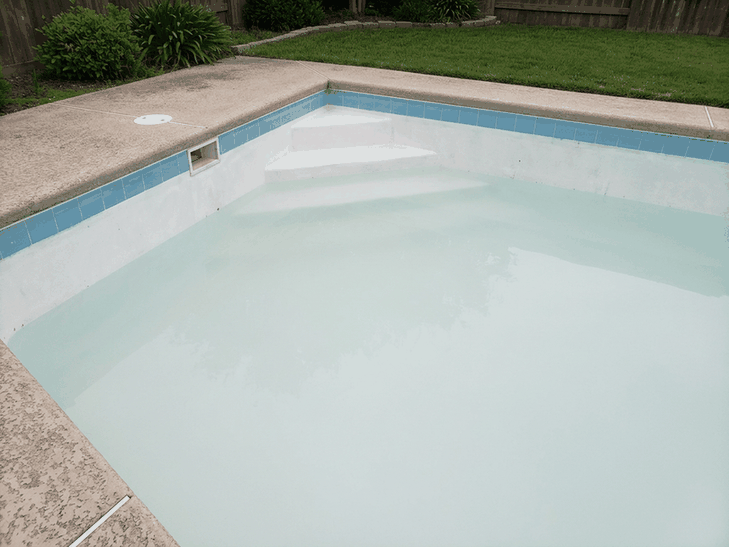
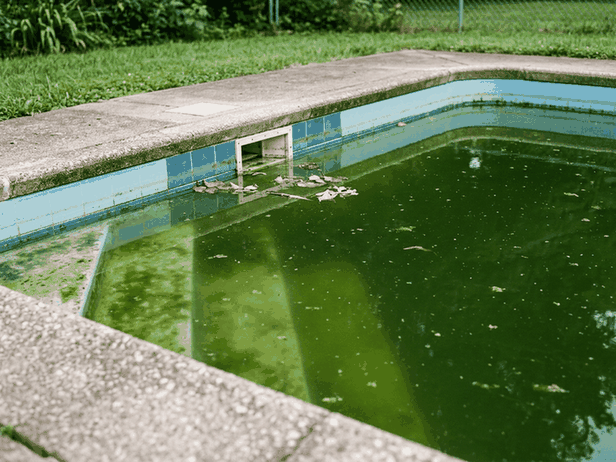
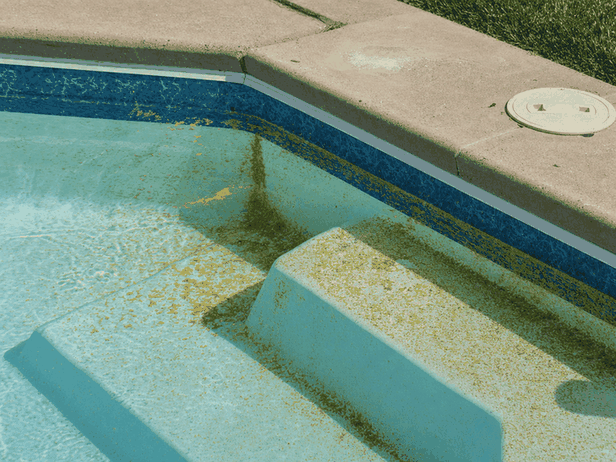
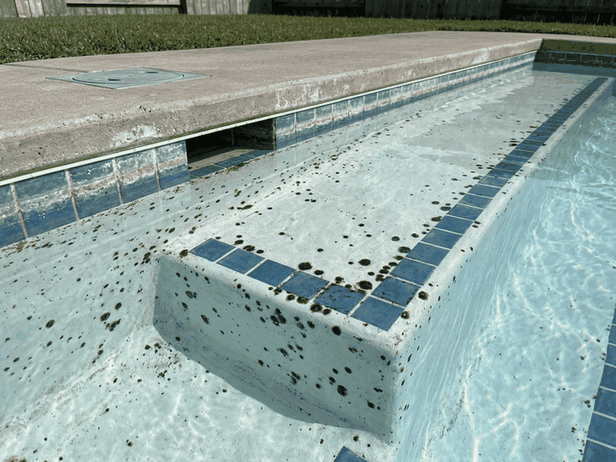
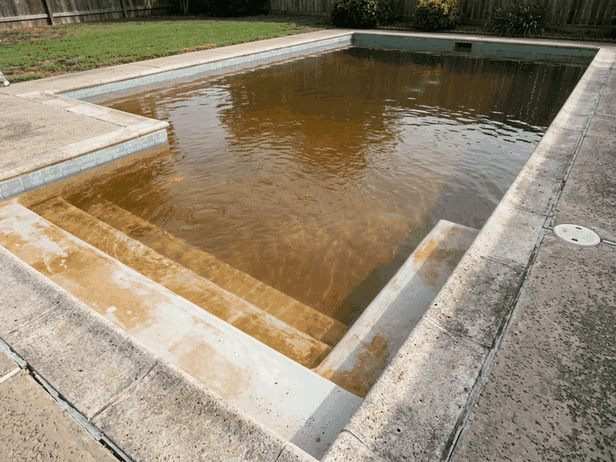
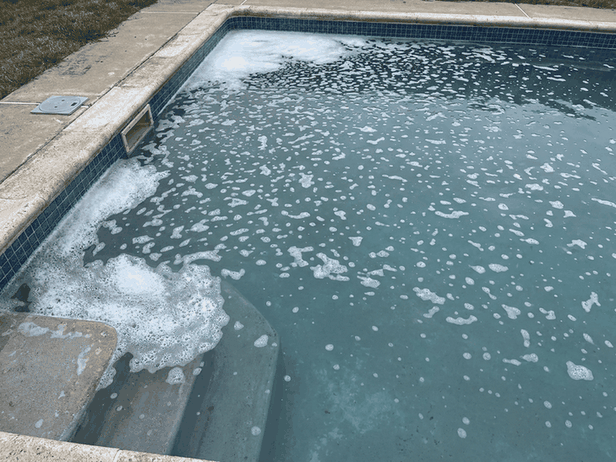
- Cloudy water
- Most pools clear in one to two days. That is after you fix the cause and keep the filter running.
- Green and cloudy
- This is usually algae. Shock, a strong dose of chlorine, kills it. How much you need depends on how dark the green is and how big your pool is, so pick the photo above.
- Safe to swim?
- Not until you can see the bottom. Look for the drain grate at the deepest point. A test should also show chlorine and pH in the safe range: the swim check has the numbers.
Cloudy or milky water
When a pool goes cloudy, the usual causes are a filter that needs cleaning or longer running, not enough chlorine, or pH that has risen too far (pH is the acid balance shown on your test strip). Think back to what came just before: a storm, a shock, a new chemical, or opening the pool for summer. If the water is still cloudy after that, a clarifier or a flocculant can finish the job. A clarifier helps the filter catch the haze; a flocculant sinks it to the floor so you can vacuum it out.
Green water and algae
Algae, a tiny plant-like growth, is the usual cause of cloudy green water, and darker green needs more shock. If the water turned green right after a shock but you can still see the bottom, the cause is probably metal in the water (usually copper), not algae. More shock only makes it darker.
Brown, foamy or smelly water
When water turns brown or rusty just after a shock, metal is the usual reason, not dirt. Lotion and soap on swimmers, or algaecide (an algae-killing liquid), are the usual sources of foam. A strong chlorine smell usually means the chlorine is used up, not that there is too much. A shock gets rid of the smell.